
Enterprise Employee Referral Statistics You Need to Know for 2026: AI is Game-Changer for Enterprise Businesses
December 8, 2025
Enterprise Hiring Trends 2026: Employee Referral Statistics Every Large Organization Needs To Know
Enterprise hiring in 2026 continues to evolve rapidly. Talent shortages, longer hiring cycles, and increased turnover pressures are forcing organizations to rethink how they attract and retain top talent. Employee referral programs have emerged as one of the most reliable, scalable, and cost effective strategies for large companies looking to build stronger teams.
This blog breaks down the latest referral statistics for enterprise organizations in 2026, why referrals outperform traditional recruiting channels, and how companies can maximize the impact of their referral programs.
Key Employee Referral Statistics for Enterprise Companies in 2026
Below is a complete summary of the data points from the latest enterprise referral findings.
Adoption and Usage
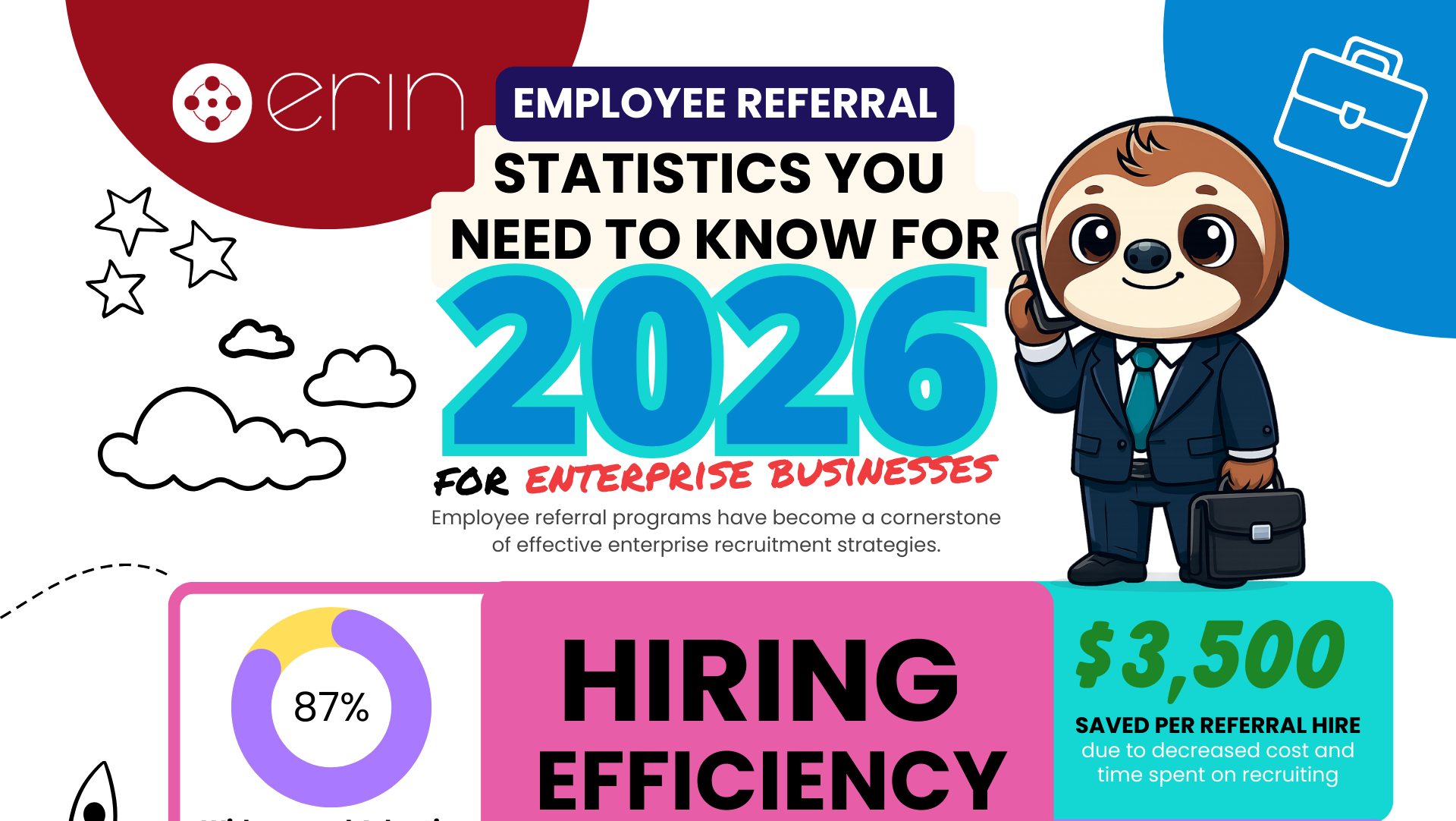
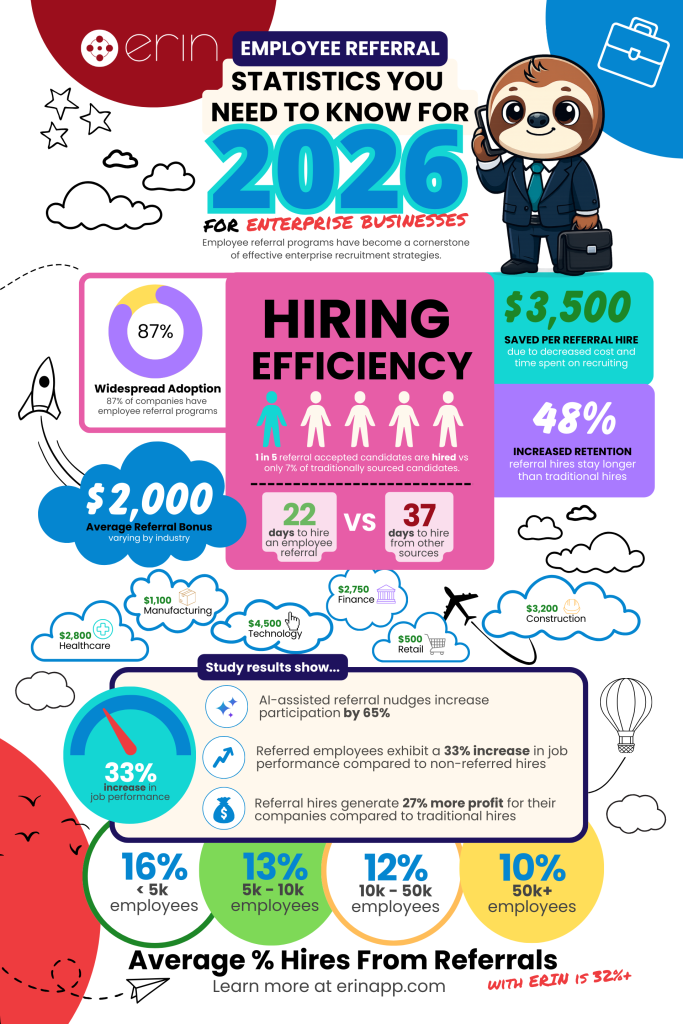
87 percent of enterprise companies have an employee referral program.
2026 Stats – Enterprise – Infog…
Referrals are considered a foundational component of modern enterprise talent acquisition.
Hiring Efficiency
22 days to hire an employee referral.
37 days to hire from other traditional sources.
1 in 5 referral accepted candidates are hired.
Only 7 percent of traditional applicants are hired.
Cost Savings and ROI
3,500 dollars saved per referral hire because of reduced recruiting labor and sourcing costs.
Retention and Performance
Referral hires have a 48 percent higher retention rate.
Referred employees show a 33 percent increase in job performance.
Referral hires generate 27 percent more profit for enterprises.
AI assisted referral nudges increase participation by 65 percent.
Referral Bonus Averages by Industry
Healthcare: 2,800 dollars
Manufacturing: 1,100 dollars
Technology: 4,500 dollars
Finance: 2,750 dollars
Retail: 500 dollars
Construction: 3,200 dollars
Percent of Hires From Referrals by Company Size
Companies with fewer than 5,000 employees: 16 percent
Companies with 5,000 to 10,000 employees: 13 percent
Companies with 10,000 to 50,000 employees: 12 percent
Companies with more than 50,000 employees: 10 percent
Companies using ERIN average more than 32 percent of hires from referrals.
Employee Referral Programs Are Becoming Essential for Enterprise Talent Strategy
With 87 percent of enterprise organizations running referral programs, referrals have officially become a core pillar of enterprise hiring. Large companies face complex hiring needs, which include high volume recruiting, niche skills, multi location operations, and long approval processes. Referrals help simplify these challenges.
Enterprises use referrals to improve hiring quality, reduce talent acquisition costs, and create culture driven hiring pipelines. Employee referrals also allow organizations to tap into networks they cannot reach through job boards or paid media.
Referrals Dramatically Improve Hiring Speed in Enterprise Organizations
Hiring speed is a major competitive factor for enterprise companies. Delays in filling critical roles increase labor costs, slow down productivity, and put pressure on existing teams.
Referral hires take an average of 22 days, while traditional sources take 37 days. This time savings has a measurable impact on enterprise operations. Faster hiring cycles help large organizations maintain project velocity, reduce burnout, and keep critical initiatives on track.
Referred candidates tend to move through the process more quickly because they join with higher engagement, stronger trust, and a clearer understanding of expectations.
Referred Employees Significantly Outperform Traditional Hires
Quality of hire is one of the most important talent metrics in enterprise HR. Enterprise roles often require specialized skills, technical expertise, leadership traits, and cross functional collaboration. Referred employees perform better because their referrer understands both the candidate and the role.
Referred enterprise employees show a 33 percent increase in job performance and generate 27 percent more profit than those hired from traditional channels.
This performance lift influences entire departments and improves organizational outcomes across sales, service, engineering, operations, and leadership functions.
Referral Hires Deliver Higher Retention in Enterprise Environments
Turnover in enterprise organizations is costly. It affects productivity, training budgets, internal mobility, and long term workforce planning. Referral hires have a 48 percent higher retention rate, which helps large companies maintain continuity and reduce churn related expenses.
Enterprise employees who join through referrals arrive with built in social support, clearer expectations, and stronger alignment to organizational culture. This leads to longer tenure, higher engagement, and better performance.
Enterprises Save an Average of 3,500 Dollars Per Referral Hire
Enterprise companies often spend heavily on job boards, ads, sourcing tools, agencies, and contract recruiters. Reducing that spend creates significant savings at scale.
Saving 3,500 dollars per referral hire means that organizations making hundreds or thousands of hires per year can see millions in cost reduction. These savings can be reinvested in employer branding, learning and development, or retention programs.
Referral Bonus Trends in Enterprise Industries
Enterprise referral bonuses vary across sectors. Technology and construction offer some of the highest incentives, while retail and manufacturing provide smaller but still effective amounts. The right bonus amount depends on job difficulty, competition for talent, and internal compensation strategy.
Even with varied bonus levels, most enterprise employees refer for more than financial reasons. They refer because they want better coworkers, stronger teams, and more alignment within their departments.
AI Powered Referral Engagement Is Transforming Enterprise Hiring
AI driven referral engagement is becoming one of the most important innovations for enterprise talent acquisition. AI assisted nudges increase participation by 65 percent and help companies scale their referral programs without adding manual workload.
AI identifies the most likely referrers, recommends jobs to the right employees, and ensures consistent engagement. This is especially valuable in large organizations where communication can become diluted or inconsistent.
Referral Performance Benchmarks for Enterprise Companies
The percentage of hires from referrals remains strong across all enterprise sizes. Companies using modern referral technology regularly achieve more than 32 percent of hires from referrals.
These benchmarks help enterprise talent teams evaluate their program performance and identify opportunities to optimize engagement and reach.
How Enterprise Organizations Can Strengthen Referral Performance in 2026
Make referrals easy and mobile friendly
Use AI powered engagement to drive participation
Reward referrals transparently and promptly
Promote high priority roles consistently
Recognize employees who refer quality candidates
Track ROI metrics including performance, retention, and time to hire
The Bottom Line: Referrals Are the Most Powerful Hiring Channel for Enterprise Companies in 2026
Enterprise companies that invest in strong referral programs see measurable improvements in hiring speed, employee performance, retention, and cost efficiency. As hiring becomes more competitive and specialized, referrals offer a strategic advantage that improves alignment, strengthens teams, and accelerates organizational growth.
With the help of modern referral technology and AI, enterprise organizations can make referrals a predictable and scalable part of their hiring engine for 2026 and beyond.