
Healthcare Hiring Trends & Referral Statistics for 2027
October 13, 2026
The nursing shortage eased slightly in 2026, but it did not go away. The 2026 NSI National Health Care Retention & RN Staffing Report puts the national hospital RN vacancy rate at 8.6 percent, with a third of hospitals at 10 percent or higher. It still takes an experienced RN about 78 days to recruit, and replacing one bedside RN costs roughly $60,000.
That combination of long vacancies and expensive turnover is exactly where employee referrals earn their keep. This post breaks down the 2027 healthcare referral statistics, what changed from last year, and how health systems can get more from their programs.
Key Employee Referral Statistics for Healthcare in 2027
Adoption and Usage
- 86 percent of healthcare organizations have an employee referral program, up from 84 percent in 2026.
- Referral programs are now foundational to healthcare recruitment.
Hiring Efficiency
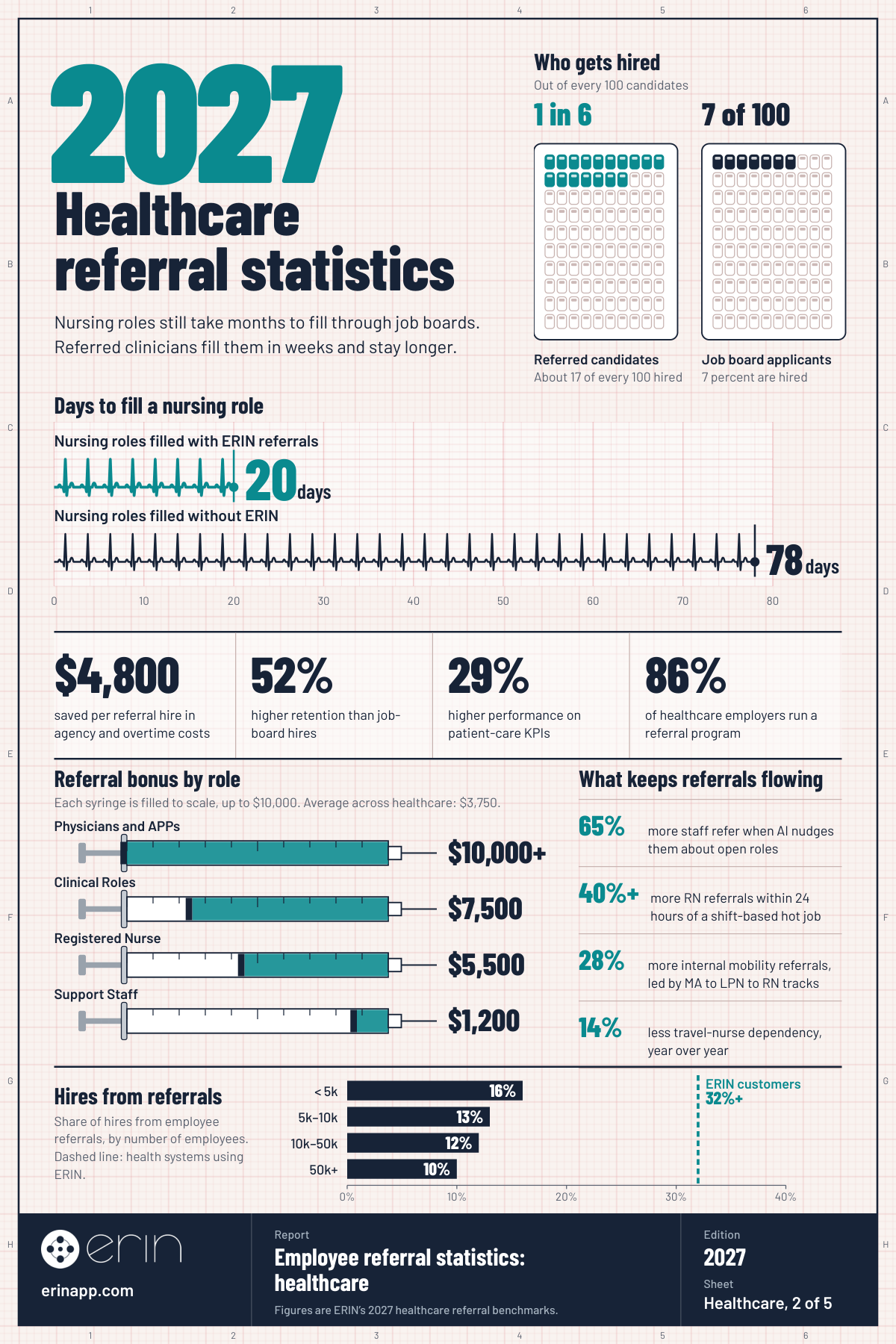
- 20 days to fill nursing roles using ERIN.
- 78 days to fill nursing roles without ERIN, in line with NSI’s 2026 RN recruitment benchmark.
- 1 in 6 referral accepted candidates are hired.
- Only 7 percent of traditionally sourced applicants are hired.
Cost Savings and ROI
- $4,800 saved per referral hire, up from $4,500, driven by higher agency, overtime, and turnover costs.
Retention and Performance
- Referral hires have a 52 percent higher retention rate than traditional hires.
- Referred employees deliver 29 percent higher performance on patient-care KPIs.
- AI-assisted referral nudges increase participation by 65 percent.
- Travel-nurse dependency dropped 14 percent year over year for systems with strong referral programs, up from 12 percent.
- Internal mobility referrals rose 28 percent, led by MA to LPN to RN growth tracks.
- Shift-based referral “hot jobs” increase RN referrals by more than 40 percent within 24 hours.
Healthcare Referral Bonus Averages
| Role | 2027 average bonus | 2026 average bonus |
|---|---|---|
| Physicians and APPs | $10,000+ | $10,000+ |
| Clinical roles | $7,500 | $7,500 |
| Registered Nurse | $5,500 | $5,000 |
| Support staff | $1,200 | $1,000 |
| Average across healthcare | $3,750 | $3,500 |
Percent of Hires From Referrals by Organization Size
- Fewer than 5,000 employees: 16 percent
- 5,000 to 10,000 employees: 13 percent
- 10,000 to 50,000 employees: 12 percent
- More than 50,000 employees: 10 percent
Healthcare systems using ERIN average more than 32 percent of hires from referrals.
What Changed for 2027
- RN bonuses rose to $5,500. Vacancy rates improved, but the time to recruit an experienced RN did not. Systems are paying more to reach nurses through people they already trust.
- Support staff bonuses rose to $1,200. Environmental services, patient transport, and CNA roles compete directly with retail and logistics employers for the same applicants.
- Referrals are cutting travel spend faster. Systems with strong referral programs reduced travel-nurse dependency by 14 percent year over year.
- Internal mobility is a bigger referral source. Employees increasingly refer colleagues into growth tracks, not only outside candidates.
Referral Programs Dramatically Improve Hiring Speed in Healthcare
Few industries feel an open role as sharply as healthcare. Understaffed units drive overtime, burnout, and patient-safety risk.
With ERIN, nursing roles fill in 20 days compared to 78 days without referral support. Closing that gap stabilizes schedules, reduces agency spend, and protects the staff already carrying extra shifts. Referred candidates move faster because they already understand the demands of the unit from someone who works there.
Referred Healthcare Employees Improve Patient Care Outcomes
Referred employees show 29 percent higher performance on patient-care KPIs. Clinicians know who can handle a heavy assignment, communicate well with patients, and stay steady under pressure. That natural vetting produces stronger hires and more consistent care.
Referral Hires Deliver Higher Retention
NSI reports hospital RN turnover at 17.6 percent. Every departure restarts a long, expensive recruiting cycle.
Referral hires have a 52 percent higher retention rate than traditional hires. They join with a built-in support system and realistic expectations. Internal mobility referrals, up 28 percent, extend that effect by keeping growing employees inside the organization.
Health Systems Save an Average of $4,800 Per Referral Hire
Referrals reduce reliance on agencies, travel contracts, job boards, and overtime backfill. For systems filling hundreds or thousands of roles a year, $4,800 per hire adds up to millions. The 14 percent drop in travel-nurse dependency frees even more budget for permanent staff.
Referral Bonus Trends in Healthcare
Healthcare bonuses are tiered by scarcity and credentialing. Physicians, APPs, and specialized clinical roles command the largest incentives. RN bonuses moved up again for 2027. Support-staff bonuses remain modest but effective.
Money is not the only motivator. Clinicians refer because they want safer staffing ratios and reliable teammates. A bonus program that also promises a better-staffed unit taps both reasons.
AI-Powered Referral Engagement Is Transforming Healthcare Hiring
AI-assisted nudges increase referral participation by 65 percent, even among busy clinical staff. Automated role matching and personalized reminders keep critical roles visible on nights, weekends, and during census surges.
Shift-based hot-job campaigns are especially effective, lifting RN referrals by more than 40 percent within 24 hours of launch.
How Healthcare Organizations Can Strengthen Referral Performance in 2027
- Make referrals mobile and text-based for clinical staff on the move.
- Use AI automation to keep participation high across shifts.
- Run hot-job campaigns for urgent units and specialties.
- Pay bonuses quickly and explain milestones clearly.
- Promote internal mobility referrals into growth tracks.
- Track time to fill, agency avoidance, retention, and patient-care performance.
The Bottom Line
Referrals give healthcare organizations faster hiring, stronger retention, better patient-care performance, and lower labor costs. With RN recruiting still taking months through traditional channels, the systems that invest in modern, AI-powered referral programs will hold a real staffing advantage in 2027.
About this data: referral figures reflect ERIN’s 2027 healthcare benchmarks, updated from our 2026 report. Industry vacancy, turnover, and time-to-fill figures come from the 2026 NSI National Health Care Retention & RN Staffing Report.
Download the 2027 Healthcare referral statistics infographic
Download the free PDF · View the full-size PNG · Explore ERIN
Sources and benchmark context
Referral statistics in this article are attributed to ERIN's supplied 2027 healthcare benchmark report. They are not national labor-market averages or guaranteed results. The supplied report does not specify sample size, observation period, or metric definitions.
Industry staffing context: 2026 NSI National Health Care Retention & RN Staffing Report. ERIN nursing time to fill and the NSI industry benchmark cover different populations and should not be read as a controlled comparison.