
Small Business Employee Referral Statistics for 2027
October 13, 2026
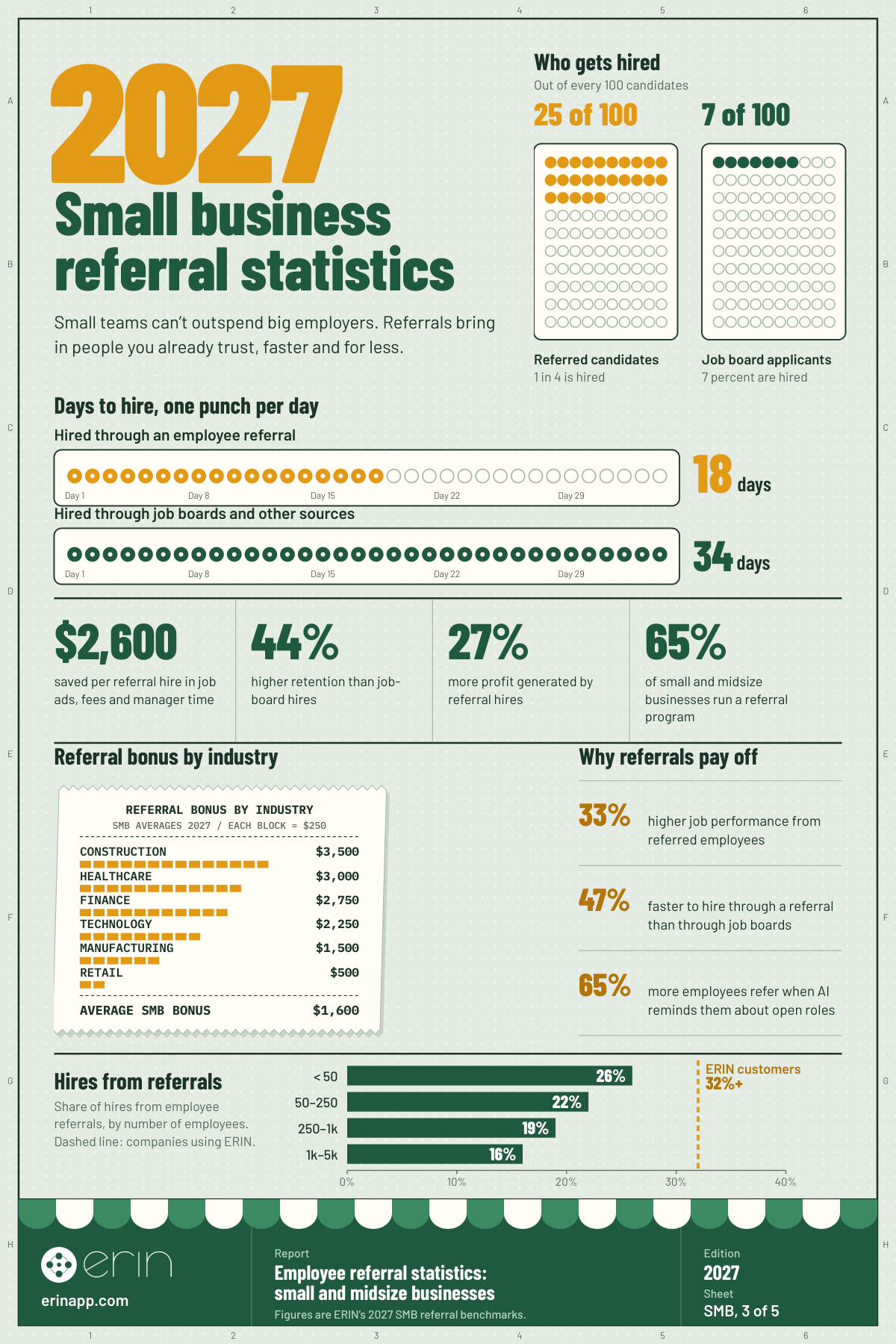
Small and midsize businesses compete for talent against employers with bigger budgets, bigger brands, and full recruiting teams. In 2027 that gap is widest for skilled and hands-on roles, where large employers and data center projects are bidding up wages.
Employee referrals level the playing field. They give SMBs access to trusted candidates who already know what the company is like, without paying for that access. This post covers the 2027 SMB referral statistics, what changed from last year, and how SMBs can get more value from their programs.
Key Employee Referral Statistics for SMBs in 2027
Adoption and Usage
- 65 percent of SMBs have an employee referral program, up from 63 percent in 2026.
- Referral programs are a cornerstone of effective SMB recruiting.
Hiring Efficiency
- 18 days to hire an employee referral, down from 19.
- 34 days to hire from other sources.
- 1 in 4 referral accepted candidates are hired.
- Only 7 percent of traditionally sourced candidates are hired.
Cost Savings and ROI
- $2,600 saved per referral hire, up from $2,500, through reduced job-board spend, agency fees, and owner and manager time.
Retention and Performance
- Referral hires have a 44 percent higher retention rate than non-referral hires.
- Referred employees show a 33 percent increase in job performance.
- Referral hires generate 27 percent more profit.
- AI-assisted referral nudges increase participation by 65 percent.
Referral Bonus Averages by Industry
| Industry | 2027 average bonus | 2026 average bonus |
|---|---|---|
| Construction | $3,500 | $3,200 |
| Healthcare | $3,000 | $2,800 |
| Finance | $2,750 | $2,750 |
| Technology | $2,250 | $2,500 |
| Manufacturing | $1,500 | $1,100 |
| Retail | $500 | $500 |
| Average SMB referral bonus | $1,600 | $1,500 |
Percent of Hires From Referrals by Company Size
- Fewer than 50 employees: 26 percent
- 50 to 250 employees: 22 percent
- 250 to 1,000 employees: 19 percent
- 1,000 to 5,000 employees: 16 percent
Companies using ERIN average more than 32 percent of hires from referrals.
What Changed for 2027
- New SMB-specific size benchmarks. Our 2026 report used enterprise size bands. For 2027 we broke out the SMB range, where smaller teams lean on referrals the most: 26 percent of hires at companies under 50 employees.
- Construction and manufacturing bonuses jumped. SMB contractors and manufacturers are competing with large employers and data center projects for the same electricians, welders, and technicians.
- Technology bonuses eased. A softer tech hiring market brought SMB technology bonuses down to $2,250.
- Referrals got a day faster. Time to hire a referral dropped to 18 days while traditional channels held at 34.
Referrals Deliver Faster Hiring for SMBs
Every open seat at a small business lands on someone who is already busy. Referrals cut the average time to hire to 18 days, compared to 34 days through other sources, nearly twice as fast.
Referred candidates respond quickly, show high engagement, and need less sourcing effort. They already have a realistic view of the job, so interviews move faster.
Quality of Hire: Referred Employees Outperform
Referred employees show a 33 percent performance increase and generate 27 percent more profit. In a small team, one strong hire changes customer experience and output. Referrals consistently bring in people aligned with the culture and expectations.
Referral Hires Stay Longer in SMB Roles
Referral hires have a 44 percent higher retention rate. For an SMB, keeping one good employee for an extra year can save thousands in rehiring and training. Referred employees integrate faster because they join through a trusted relationship.
SMBs Save an Average of $2,600 Per Referral Hire
Lower job-board spend, fewer agency fees, and less time spent screening all add up. Because referrals hire faster and stay longer, the savings compound. That money can go back into growth, training, and employee experience.
Referral Bonuses in SMBs: What Companies Pay in 2027
Bonuses follow the labor market. Construction and healthcare offer the highest SMB incentives, manufacturing rose sharply, and technology eased. Retail stays low but effective.
Employees refer for more than money. Team culture, job satisfaction, and helping friends find good work all drive referrals, so make referring easy and say thank you often.
AI-Powered Referral Engagement Is Transforming SMB Hiring
SMBs rarely have a dedicated recruiting team. AI fills that gap by sending reminders, matching open roles to the right employees, and keeping the program active without manual work. AI-assisted nudges increase referral activity by 65 percent.
How SMBs Can Strengthen Referral Performance in 2027
- Make referring simple and mobile-friendly.
- Use automation and AI to keep employees engaged.
- Pay bonuses quickly and consistently.
- Share open roles regularly, not only when it is urgent.
- Celebrate successful referrals in team meetings.
- Track time to fill, referral volume, and retention.
The Bottom Line
Referrals are the most valuable hiring channel for SMBs in 2027. They deliver faster hires, lower costs, stronger performance, and better retention. With AI handling the engagement, SMBs can run a referral program that competes with much larger employers.
About this data: figures reflect ERIN’s 2027 SMB referral benchmarks, updated from our 2026 report to reflect current labor-market conditions.
Download the 2027 SMB referral statistics infographic
Download the free PDF · View the full-size PNG · Explore ERIN
Sources and benchmark context
Referral statistics in this article are attributed to ERIN's supplied 2027 smb benchmark report. They are not national labor-market averages or guaranteed results. The supplied report does not specify sample size, observation period, or metric definitions.