
Healthcare Hiring Trends 2026: Employee Referral Statistics Every Hospital and Health System Needs To Know
December 8, 2025
Healthcare Hiring Trends 2026: Employee Referral Statistics Every Hospital and Health System Needs To Know
Healthcare organizations in 2026 are facing unprecedented hiring challenges. Clinical shortages, high turnover in support roles, burnout, and rising labor costs continue to pressure hospitals, health systems, and long term care organizations. In this environment, employee referral programs have become one of the most effective strategies for attracting qualified talent, improving retention, and reducing staffing expenses.
This blog breaks down the latest referral statistics for healthcare, why referral based hiring outperforms traditional recruiting channels, and how healthcare systems can maximize the value of their referral programs.
Key Employee Referral Statistics for Healthcare in 2026
Below is a complete summary of the healthcare referral data.
Adoption and Usage
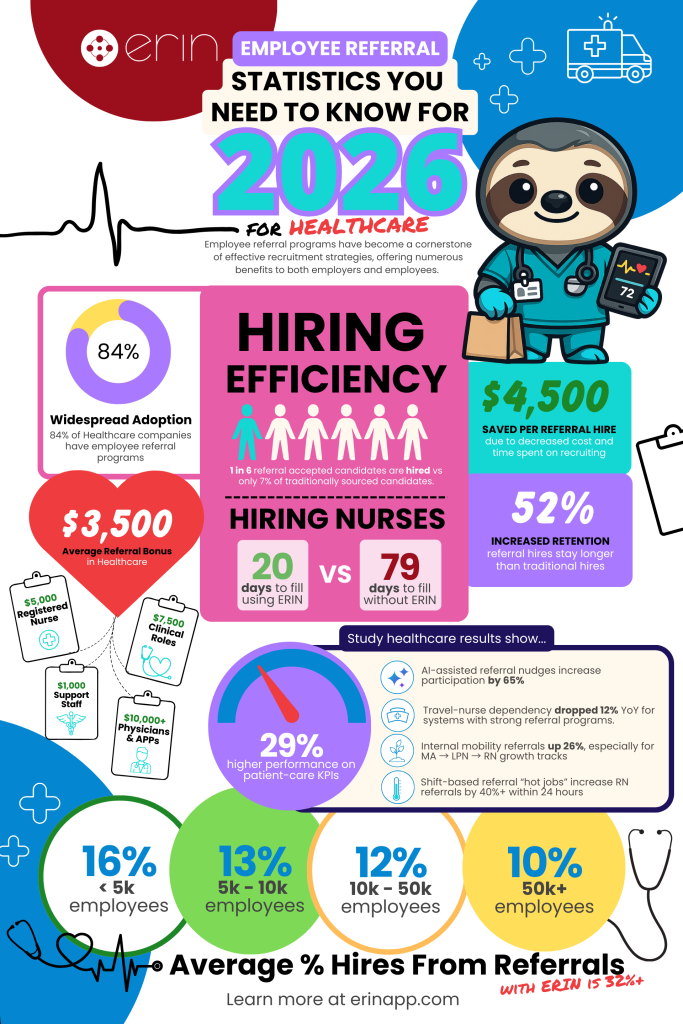
84 percent of healthcare organizations have an employee referral program.
Referral programs are now considered foundational for healthcare recruitment.
Hiring Efficiency
20 days to fill nursing roles using a referral program.
79 days to fill without referral support.
1 in 6 referral accepted candidates are hired.
Only 7 percent of traditionally sourced applicants are hired.
Cost Savings and ROI
4,500 dollars saved per referral hire because of reduced sourcing costs and less backfill overtime.
Retention and Performance
Referral hires have a 52 percent higher retention rate than traditional hires.
Referred employees deliver 29 percent higher performance on patient care KPIs.
AI assisted referral nudges increase participation by 65 percent.
Travel nurse dependency decreased 12 percent year over year for systems with strong referral programs.
Internal mobility referrals increased 26 percent, especially MA to LPN to RN growth paths.
Shift based referral hot jobs increased RN referrals by more than 40 percent within 24 hours.
Healthcare Referral Bonus Averages
Registered Nurse: 5,000 dollars
Clinical Roles: 7,500 dollars
Physicians and APPs: 10,000 dollars or more
Support Staff: 1,000 dollars
Average bonus across healthcare: 3,500 dollars
Percent of Hires From Referrals by Organization Size
Organizations with fewer than 5,000 employees: 16 percent
Organizations with 5,000 to 10,000 employees: 13 percent
Organizations with 10,000 to 50,000 employees: 12 percent
Organizations with more than 50,000 employees: 10 percent
Healthcare systems using ERIN average more than 32 percent of hires from referrals.
Employee Referral Programs Are Becoming Essential for Healthcare Talent Strategy
Healthcare hiring is more complex than ever. Clinical roles require specialized credentials, patient care experience, and rigorous vetting. Support roles face high turnover and staffing shortages. Referral programs help organizations attract qualified talent more efficiently by leveraging the networks of current employees who understand the unique expectations of healthcare environments.
Healthcare workers are deeply connected within their professional communities. Referral programs help hospitals and health systems tap into these trusted networks and bring in candidates who are more prepared, more aligned with the organization’s values, and more likely to succeed in patient facing roles.
Referral Programs Dramatically Improve Hiring Speed in Healthcare
Few industries feel the impact of open roles as urgently as healthcare. Staffing shortages affect patient safety, quality of care, and burnout levels among existing staff. Faster hiring directly improves operational stability.
With referral based recruitment, it takes only 20 days to fill a role compared to 79 days without referral support. This accelerated timeline allows healthcare organizations to reduce overtime, stabilize shift schedules, and improve patient experience by ensuring appropriate staffing levels.
Referred candidates move faster through the hiring pipeline because they already understand the demands of the job and are more prepared to commit.
Referred Healthcare Employees Improve Patient Care Outcomes
Performance quality is vital in healthcare. Referred employees show 29 percent higher performance on patient care KPIs. When employees join with stronger alignment and clearer expectations, the quality of care improves.
Healthcare referrers understand who is capable of meeting clinical demands, handling patient interaction, and managing the pressures of the environment. This natural vetting leads to better hires, stronger engagement, and more consistent patient outcomes.
Referral Hires Deliver Higher Retention for Healthcare Organizations
Retention challenges in healthcare are well documented. With clinical burnout, competitive labor markets, and rising agency usage, keeping staff is both difficult and costly.
Referral hires have a 52 percent higher retention rate than traditional hires. This improvement reduces turnover expenses, stabilizes patient care teams, and supports long term workforce planning.
Internal mobility referrals are also increasing. Growth paths such as MA to LPN to RN have seen a 26 percent increase in referral activity, showing that employees are invested in bringing in strong candidates who want to grow within the organization.
Healthcare Systems Save an Average of 4,500 Dollars Per Referral Hire
Referral programs significantly reduce reliance on contract labor, job boards, staffing agencies, and repeated overtime backfill. For healthcare systems filling hundreds or thousands of roles per year, savings like these produce substantial financial impact.
In addition to cost reduction, referral hires decrease dependency on travel nurses by 12 percent year over year, freeing budgets and improving consistency in patient care.
Referral Bonus Trends in Healthcare
Healthcare organizations use structured bonus tiers based on role difficulty, credentialing needs, and market demand. High priority roles such as RNs, APPs, and physicians command larger incentives, while support staff bonuses remain accessible and effective.
Healthcare employees refer for both personal and professional reasons. They want reliable coworkers, safer staffing ratios, and strong clinical teams. Financial rewards help, but the desire to improve the work environment is often a stronger motivator.
AI Powered Referral Engagement Is Transforming Healthcare Hiring
AI tools are becoming essential in healthcare talent acquisition. AI assisted nudges increase participation by 65 percent and help keep referral activity consistent, even among busy clinical staff.
Automated suggestions, role matching, and personalized reminders support recruitment teams that are often stretched thin. AI helps ensure that critical roles receive the referral visibility they need, especially on night shifts, weekends, or during staffing surges.
Shift based referral hot job campaigns have proven especially effective, increasing RN referrals by more than 40 percent within 24 hours for urgent openings.
Referral Performance Benchmarks for Healthcare Systems
Referral performance varies by organizational size, but even large systems consistently achieve double digit referral contribution. When supported by modern technology and strategic communication, healthcare organizations can reach more than 32 percent of hires from referrals.
These benchmarks give healthcare leaders a realistic understanding of program potential and help guide annual hiring strategies.
How Healthcare Organizations Can Strengthen Referral Performance in 2026
Make referrals simple and mobile friendly for on the go clinical staff
Use AI automation to increase referral participation
Highlight urgent clinical roles with targeted hot job campaigns
Reward staff quickly and transparently for successful referrals
Promote internal mobility referral opportunities
Track critical metrics such as time to fill, agency avoidance, retention, and patient care performance
The Bottom Line: Referrals Are the Most Strategic Hiring Channel for Healthcare in 2026
Employee referral programs offer unmatched benefits for healthcare organizations. Faster hiring, higher retention, stronger performance, lower labor costs, and reduced travel nurse dependency all contribute to healthier, more stable workforce operations.
As AI powered referral technology continues to advance, healthcare systems that invest in modern referral solutions will gain a significant strategic advantage in 2026 and beyond.