
SMB Employee Referral Statistics You Need to Know for 2026: AI is Game-Changer for Small and Medium Sized Businesses
December 8, 2025
SMB Hiring Trends 2026: Employee Referral Statistics Every Small Business Must Know
Hiring in 2026 looks very different for small and midsize businesses. Competition for skilled workers continues to intensify, turnover remains high, and traditional recruiting channels are producing inconsistent results. In this environment, employee referral programs have become one of the most effective ways for SMBs to attract and retain great talent. Referrals consistently deliver faster hires, higher quality candidates, and better retention outcomes.
This blog breaks down the latest data shaping how small businesses hire in 2026, explains why referrals matter more than ever, and shows how SMBs can get the most value from their referral programs.
Key Employee Referral Statistics for SMBs in 2026
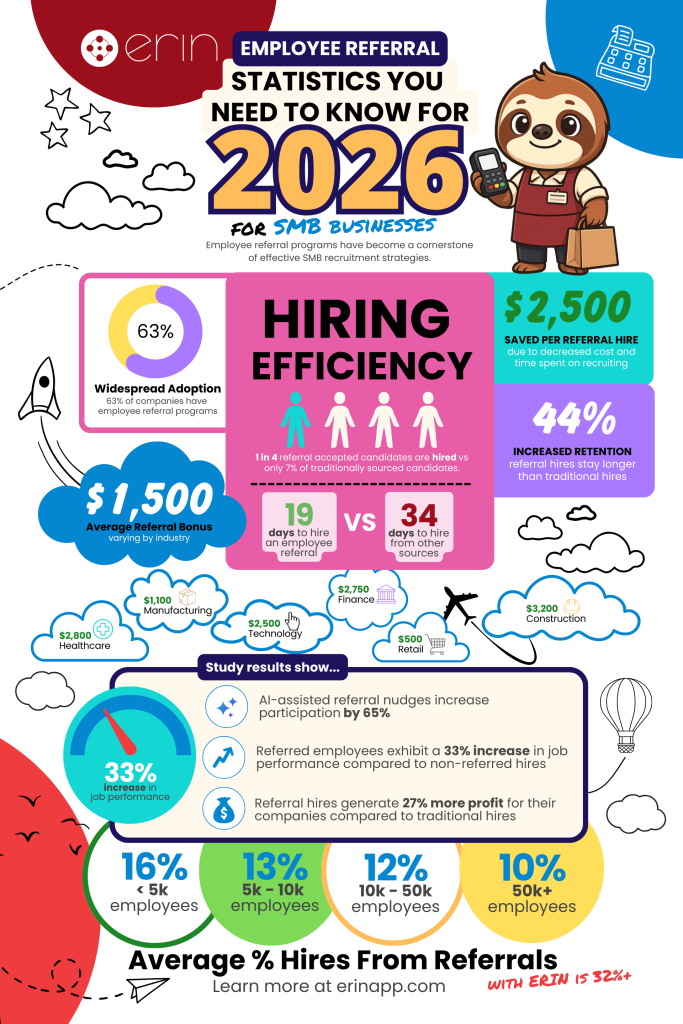
Below is a complete summary of the data points featured in the 2026 SMB referral insights:
Adoption and Usage
63 percent of SMBs have an employee referral program.
Referral programs are considered a cornerstone of effective SMB recruiting.
Hiring Efficiency
19 days to hire an employee referral.
34 days to hire from other traditional sources.
1 in 4 referral accepted candidates are hired.
Only 7 percent of traditionally sourced candidates are hired.
Cost Savings and ROI
2,500 dollars saved per referral hire because of reduced sourcing and recruiting time.
Retention and Performance
Referral hires have a 44 percent higher retention rate than non referral hires.
Referred employees show a 33 percent increase in job performance.
Referral hires generate 27 percent more profit for SMBs.
AI assisted referral nudges increase participation by 65 percent.
Referral Bonus Averages by Industry
Healthcare: 2,800 dollars
Manufacturing: 1,100 dollars
Technology: 2,500 dollars
Finance: 2,750 dollars
Retail: 500 dollars
Construction: 3,200 dollars
Percent of Hires From Referrals by Company Size
Companies with fewer than 5,000 employees: 16 percent of hires from referrals
Companies with 5,000 to 10,000 employees: 13 percent
Companies with 10,000 to 50,000 employees: 12 percent
Companies with more than 50,000 employees: 10 percent
Companies using ERIN average more than 32 percent of hires from referrals.
Employee Referral Programs Are Becoming Standard Among SMBs
With 63 percent of SMBs now running referral programs, more small businesses are discovering how referrals can level the playing field when competing with larger companies. Referrals provide access to trusted candidates who already understand the company culture through their referrer. For many SMBs, this creates stability and reduces dependency on expensive or unpredictable recruiting channels.
Small businesses often operate with limited resources, and hiring is one of the most time consuming and costly responsibilities. Referrals directly address this challenge by creating an internal pipeline of candidates who are often more qualified and easier to hire.
Referrals Deliver Faster Hiring for SMBs
Time-to-fill is one of the most important hiring metrics for SMBs. Every unfilled position places pressure on the team, slows operations, and can reduce revenue. Referrals dramatically accelerate the hiring timeline.
The average referral is hired in 19 days, while traditional sources take 34 days. This 44 percent speed advantage allows SMBs to maintain service levels and avoid prolonged talent gaps.
Referred candidates typically respond faster, show higher engagement, and require less sourcing effort. Since they often join with a better understanding of the company, the interview process is smoother and more efficient.
Quality of Hire: Referred Employees Outperform Traditional Candidates
Referrals deliver measurable improvements in job performance. Referred employees show a 33 percent performance increase and generate 27 percent more profit for SMBs.
This level of improvement has long lasting effects on productivity, customer experience, and overall organizational health. SMBs depend on high performing, reliable employees to maintain growth, and referrals consistently bring in candidates who are aligned with company culture and expectations.
Referral Hires Stay Longer in SMB Roles
Retention is a major challenge for SMBs, especially in industries with high turnover. Referral hires have a 44 percent higher retention rate, which reduces the financial and operational strain of constantly replacing employees.
Referral hires are more likely to remain with the company because they join through trusted relationships, understand expectations from day one, and integrate more quickly with the team.
SMBs Save an Average of 2,500 Dollars Per Referral Hire
SMBs benefit significantly from reduced job board spend, fewer staffing agency fees, and less time spent sourcing. Since referrals move quickly through the hiring process and stay longer, the long term savings multiply. These savings can be reinvested into growth, training, or employee experience initiatives.
Referral Bonuses in SMBs: What Companies Pay in 2026
Referral bonuses vary widely based on industry. Healthcare and construction continue to offer some of the highest incentives, while retail and manufacturing maintain lower but still effective bonus levels.
Even with variable bonus amounts, employees often refer candidates for reasons beyond financial rewards. Team culture, job satisfaction, and the desire to help friends and family find meaningful work all contribute to referral activity.
AI Powered Referral Engagement Is Transforming SMB Hiring
AI is becoming an essential tool for SMBs looking to scale referral participation without adding manual workload. AI assisted nudges and reminders increase referral activity by 65 percent.
These automated tools help SMBs maintain consistent communication with employees, identify the most likely referrers, and match open roles with relevant networks. For organizations with lean HR teams, AI serves as a digital assistant that keeps referral momentum strong.
Referral Hiring Benchmarks for SMBs in 2026
Referral performance naturally varies by company size, but even smaller SMBs see impressive results when referral programs are structured and promoted. Companies using automated referral technology average more than 32 percent of hires from referrals.
These benchmarks give SMBs a realistic expectation of referral program impact and help guide internal goal setting.
How SMBs Can Strengthen Referral Performance in 2026
Make the referral process simple and mobile friendly
Use automation and AI to increase engagement
Reward referrals quickly and consistently
Promote open roles regularly
Highlight success stories within the company
Track metrics such as time-to-fill, referral volume, and retention
The Bottom Line: Referrals Are the Most Valuable Hiring Channel for SMBs in 2026
Referral programs have become essential to SMB hiring success. They deliver faster hiring timelines, lower costs, improved performance, and significantly better retention. As AI continues to enhance referral engagement, SMBs that invest in modern referral technology will gain a clear competitive advantage in 2026 and beyond.